Tuesday, May 10, 2022

Wunderschönes Italien: Soncino zwischen Mittelalter und Touristenschönheiten mit Marcella Nardi - Interview von Maria Teresa De Donato

 Wunderschönes Italien:

Soncino zwischen Mittelalter und Touristenschönheiten

mit Marcella Nardi

Interview von Maria Teresa De Donato


(Soncino - La Rocca)


Liebe Freunde,

willkommen zu meiner Kolumne Wunderschönes Italien, die erstellt wurde, um mit Euch allen nicht nur mein Wissen zu teilen, sondern auch das der verschiedenen Kollegen, die teilnehmen werden, indem sie uns von italienischen Orten erzählen, an denen sie geboren oder gelebt haben oder die sie einfach besucht und besonders interessant gefunden haben.

Heute freue ich mich sehr, Euch meine Freundin und Autorinkollegin Marcella Nardi vorzustellen. Marcella war bereits mehrfach ein gern gesehener Gast meines Blogs und meines virtuellen u. Kulturellen Salons. Ich habe ihr in verschiedenen Interviews ihre Produktion von Detektivgeschichten, Thrillern und Krimi-Serien vorgestellt, die alle im Amazon-Vertriebsnetz und auch im Buchhandel erhältlich sind.


MTDD: Hallo Marcella und willkommen zurück. Es ist uns eine Freude, Dich heute wieder hier bei uns zu haben.

MN: Danke, Maria Teresa. Das Vergnügen ist meins auch.


MTDD: Marcella, ich weiß, dass obwohl Du in Venetien geboren wurdest, viele Jahre in der Lombardei gelebt hast.

Wohin führst Du uns heute?

MN: Ja, ich habe zweiundzwanzig Jahre in Mailand gelebt, der Stadt, die mich seit 1987 adoptiert hat.

Wie alle italienischen Regionen hat auch die Lombardei ihren Charme zwischen Natur, Technologie und historischen Schönheiten.

Heute möchte ich mit Euch über Soncino sprechen, eine Stadt in der Provinz Cremona, die nicht nur für die beeindruckende Rocca Sforzesca, besser bekannt als Rocca von Soncino, berühmt ist, sondern auch für die Anwesenheit der ersten italienischen Druckerei, in der die erste hebräische Bibel gedruckt wurde.

Deshalb führe ich Euch heute durch das mittelalterliche Dorf, von dem ich eine Karte zeige:


 (Soncino - Foto Proloco)

MTDD: Sowohl die Karte als auch der Hinweis auf den Druck der ersten hebräischen Bibel sind sehr interessant.

Was ist mit dieser Stadt?

MN: Als Geschichtsliebhaber dachte ich, ich fange mit ein paar Hinweisen zu Soncino, seiner Geburt und seiner Rocca an:


Aufgrund der durchgeführten Forschungen wird angenommen, dass das antike Castrum im vierten Jahrhundert n. Chr. Von den Goten gegründet wurde, obwohl antike Artefakte römischen Ursprungs gefunden wurden.


Die Langobarden, neue Eindringlinge, machten es zu einem militärischen Lehen. 773 erlitt es seine erste Vernichtung durch Karl den Großen.

Es wurde 1118 von Cremona gekauft und als freies Dorf und Bollwerk zur Verteidigung gegen die Mailänder und Brescia erbaut.


Nach mehreren Zerstörungen, darunter die von Federico Barbarossa im Jahr 1186, wurde sie wieder aufgebaut und immer wieder zwischen Cremonesi und Bresciani umstritten.


1247 wurde der Ghibellin Buoso Dovara Herr des Borgo und regierte die Stadt etwa zwanzig Jahre lang.


1259 nahmen die Soncinesi unter General Turcazzano an der Schlacht von Cassano d’Adda gegen Ezzelino da Romano teil. Der verwundete Tyrann wurde nach Soncino gebracht, wo er am 8. Oktober 1259 im Gefängnis des Stadtturms starb.


Soncino kam 1332 unter die Herrschaft der Visconti. Die Mitgliedschaft in der Mailänder Herrschaft wurde mit der Sforza fortgesetzt, mit Ausnahme von 3 kurzen Perioden unter der Republik Venedig (1432-1438 und 1441-1448 und 1499-1509).


Das 1509 von den Franzosen besetzte Borgo ging 1535 an die Spanier über, die es als Markgraf errichteten und es der Mailänder Familie Stampa als Lehen überließen.


1859 beendeten die Franco-Piedmontesen die österreichische Herrschaft, die 1707 die spanische ablöste.

                   Soncino wird Teil des Königreichs Italien.


(Soncino - Rocca)


MTDD: Aus Deiner Recherche geht hervor, dass Kunst und Tourismus auch für Dich zwei große Leidenschaften sind.

MN: Stimmt, das sind sie tatsächlich. Ich liebe dieses Dorf, von dem ich eine maßstabsgetreue Reproduktion gemacht habe (siehe Bilder), weil ich ein großer Liebhaber mittelalterlicher Architektur bin. Wenn Ihr durch das historische Zentrum schlendert und das städtische Gefüge beobachtet, könnt Ihr sehen, wie Soncino die Anordnung des typischen befestigten mittelalterlichen Dorfes beibehält, die wir in den Straßen, Plätzen und Gebäuden beobachten.

Sehr schön sind die von Buoso Dovara erbauten Mauern, die 1463 von Francesco Sforza renoviert und erweitert wurden.

Die Mauern tragen den Spitznamen “Venezianische Mauern”, weil die Renovierungsarbeiten von den Venezianern vor ihrer Vertreibung initiiert wurden. Wenn man durch das Dorf geht, öffnet sich am Schnittpunkt der beiden Achsen des Stadtkerns die schöne Stadtplatz, umgeben von Arkaden und dominiert vom Bürgerturm, einem Gebäude aus dem Jahr 1128 mit quadratischem Grundriss, das sich vom Palazzo Pretorio erhebt.

Um den Borgo herum zeichnen sich die bedeutendsten Gebäude durch die größere Höhe der Stockwerke und durch die Terrakotta-Dekorationen in Form von Zierbandmotiven aus, die Luftschlangen, Girlanden, Medaillons mit Engeln und Köpfen darstellen.

Sehr schön sind der Palazzo Covi und der Palazzo Azzanelli aus dem fünfzehnten Jahrhundert. Die Verfeinerung dieser Flachreliefs hängt mit dem Know-how und der langen lokalen Tradition in der Verwendung von Terrakotta zusammen, das zur Herstellung von Ziegeln, Töpferwaren und Dekorationen verwendet wird.

Jeder, der so alt ist wie ich, wird sich an den schönen Film Ladyhawke erinnern. Die meisten Szenen wurden in der Festung gedreht.

Die Geschichte dieses wunderschönen Schlosses ist einzigartig und aufgrund des hohen technologischen Niveaus seiner mittelalterlichen Erbauer einzigartig.


MTDD: Ist die Festung noch die ursprüngliche oder wurde sie im Laufe der Jahrhunderte umgebaut, vergrößert und/oder restauriert?

MN: Interessante Frage. Es scheint, dass der Verfall der alten Festung im Südosten, der ersten Militäranlage zur Verteidigung des Dorfes aus dem 10. Jahrhundert, den Herzog Galeazzo Maria Sforza veranlasste, eine neue Festung im Südwesten zu errichten. Der südwestliche kreisförmige Sockelturm ist das Ergebnis der Anpassung des bestehenden Turms.

Die Arbeiten zur Vorbereitung der neuen Festung begannen 1473 nach einem Projekt von Bartolomeo Gadio und sollten bis 1475 abgeschlossen sein.

Mit der Lehensherrschaft des Grafen Massimiliano Stampa am 3. November 1536 wurde die prachtvolle Wehrburg nach und nach in ein Wohnschloss mit wertvollem Bildschmuck umgebaut und die im Südostturm angelegte Kapelle errichtet.

Die Festung kam am 27. Mai 1876 durch das testamentarische Vermächtnis von Massimiliano Cesare Stampa, 14. und letzter Marquis von Soncino, in einem Zustand des Verfalls an die Gemeinde Soncino.

1883 beauftragte das Königliche Bildungsministerium den Architekten Luca Beltrami mit der Planung seiner Wiederherstellung und Restaurierung. Beltramis Intervention ist ein Beispiel für eine Rekonstruktion, die auf der Grundlage strenger historischer Dokumentation durchgeführt wurde.

Zu dieser Zeit war es eine hervorragende Ingenieursarbeit, einschließlich der Hydraulik, da der Wassergraben in 5 Abteilungen unterteilt war, die je nach Verteidigungsbedarf alle oder nur einige geflutet werden konnten.


MTDD: Was kannst Du uns über die erste italienische Druckerei sagen, die in Soncino gegründet wurde?

MN: Auch das ist ein faszinierender Aspekt. Tatsächlich hält Soncino noch eine weitere Überraschung für uns bereit: In Soncino wurde die erste italienische Druckerei geboren.

Ich, die Bücher und Printmedien liebt, fand das Soncino Museum der Presse  Jüdisches Druckerstudienzentrum interessant, das 1988 eingeweiht wurde, um mit den Feierlichkeiten zusammenzufallen, die zum Gedenken an ein denkwürdiges Ereignis organisiert wurden, das 500 Jahre Druck der ersten vollständigen hebräischen Bibel, das in Soncino am 22. April 1488 von einer jüdischen Familie aus Speyer, Deutschland stattfand.


(Soncino - Museum der Presse  Jüdisches Druckerstudienzentrum)


MTDD: Soncino ist daher eine Stadt, die so klein wie sie voller Schätze ist, die es zu sehen gibt ...

MN: Stimmt. Sehr interessant ist auch die Mühle Borgo Sant’Angelo, ebenfalls in Soncino. Es ist das älteste, das mit den damaligen Anlagen zur Papierherstellung verwendet wurde.

Eine Kirche, die mich mit ihrer Schönheit beeindruckt hat, ist Santa Maria delle Grazie. Es stammt aus dem frühen sechzehnten Jahrhundert und das Äußere lässt Euch nicht erahnen, welche Schönheit sich im Inneren verbirgt. Die Wände der Kirche sind vollständig mit Renaissance-Fresken bedeckt, die von den Malern Francesco Scalzi, Giulio Campi und den Brüdern Carminati da Lodi angefertigt wurden.

Die Geschichte hat es mit dieser Kirche in Soncino nicht gut gemeint: Es gab einen Diebstahl von Einrichtungsgegenständen durch den Bischof von Cremona; Es wurde ein Biwak der napoleonischen Armeen und später in ein Lagerhaus und eine Scheune umgewandelt. Aber vielleicht trägt auch das zum Charme von Santa Maria delle Grazie bei, eine der Sehenswürdigkeiten in Soncino.


 (Soncino - Rocca - Santa Maria delle Grazie Kirche)


MTDD: Marcella, mit einer gemeinsamen Freundin, Maria Cristina Buoso, Bloggerin und Autorin, haben wir vereinbart, dass sie uns bei jedem Interview ein Rezept aus Rovigo, ihrer Heimatstadt und ihrem Wohnort, oder auf jeden Fall aus Venetien, präsentiert.

Hast Du auch etwas Ähnliches für uns vorbereitet?

MN: Sicher, und zwar der Groβartige Eintopf und die Soncino-Wurzel.


(Soncino - Wurzel) 


Wie viele Touristen möchte ich auch die Geschichte des Groβartigen Eintopfs von Soncino erzählen, der auch in der Provinz Cremona weit verbreitet ist.

Tatsächlich ist der Ursprung dieser Tradition wirklich ziemlich merkwürdig.

Beim Besuch der mittelalterlichen Lebenshalle, einer der Sehenswürdigkeiten in Soncino, sagten sie, dass sich in vergangenen Jahrhunderten nur die Reichen Fleisch leisten konnten. Die Ernährung der Armen bestand hauptsächlich aus Suppen, Gemüse, Getreide und Käse.

Die einzige Gelegenheit, Fleisch zu essen, bestand darin, die Küchenabfälle aus den Küchen wohlhabender Bürger zu holen. Das Fleisch war bereits mehrere Tage alt, als es sie erreichte, also wurde es lange gekocht, um den schlechten Geruch und Geschmack zu überdecken. Daher die Tradition des Groβartigen Eintopfs.

Ein weiteres typisches Produkt von Soncino sind die Wurzeln. Es ist ein Wintergemüse, ähnlich wie Karotten, das auch als Medizin verwendet wird (es reinigt und ist gut für den Darm).

Seit über fünfzig Jahren findet das Roots Festival im Oktober statt.
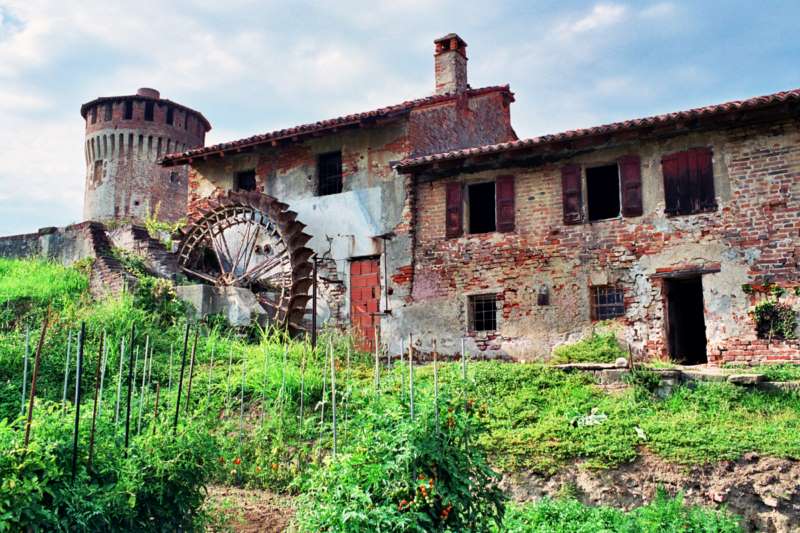


(Soncino - Die Mühle)


MTDD: Marcella, es gibt etwas, das Dich beschäftigt und das wir noch nicht verraten haben ...

Möchtest Du uns davon erzählen?

MN: Gerne. Dies ist die historische Modellierung.

Eine meiner vielen Leidenschaften ist es, kleine Umgebungen zu schaffen. 2005 habe ich die Rocca di Soncino gebaut, auch unter Berücksichtigung der Tatsache, dass die 4 Türme in Wirklichkeit nicht gleich sind.

2009 und 2016 habe ich hier in den USA, wo ich seit 14 Jahren lebe, zwei renommierte Preise gewonnen.

Der wichtigste Preis für mich war die Pacific North West Modeling Show, die von 700 Ausstellern besucht wurde, alle Männer außer mir!

Ich habe den ersten Preis für architektonische Details gewonnen.


MTDD: Herzlichen Glückwunsch! Danke Marcella für die Teilnahme an diesem Interview und auch für all die Informationen und schönen Bilder, die Du uns zur Verfügung gestellt hast.

Ich hoffe, Dich in Zukunft wieder als Gast zu haben.

 MN: Danke, dass Du mich wieder eingeladen hast. Es ist immer wieder ein Vergnügen.


MTDD: Sollten wir diejenigen, die Dich kontaktieren möchten, daran erinnern, wie sie das tun können?

 MN: Gerne. Meine offizielle Website: www.marcellanardi.com

Meine Facebook-Gruppe Libri, Cultura e Curiosità(1) Il salotto di Marcella Nardi: Cultura, Libri & Curiosità | Facebook


Wednesday, May 4, 2022

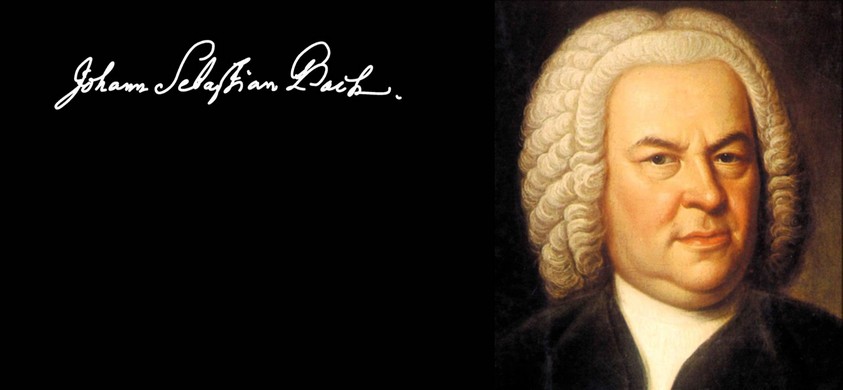
Johann Sebastian Bach (Eisenach III-21-1685 - Leipzig VII-28-1750)


The most outstanding representative of the German musical baroque was born in a village in Thuringia as a descendant of a family devoted to music for at least four generations. Orphaned by his father and mother at the age of ten, he attended the high school in Ohrdruf as a guest of his brother Johann Christoph who learned the rudiments of music. But Johann Sebastian was essentially self-taught and was able to treasure his experience as a singing child in Lüneburg (from 1700), where he learned valuable lessons from studying in the well-stocked library of San Michele. Here he studied the works of foreign masters - mainly Italians- and came into contact with a flourishing musical life that introduced him to German performers and foreigners and led him to often go to Hamburg, where the North German school was in full bloom. In 1703 he entered the Weimar court as a violinist, but a few months later, we find him in Arnstadt as an organist in San Bonifacio, where he remained for four years. He held the same position in Mühlhausen in the church of San Biagio, and in Dornheim, he married his cousin Maria Barbara. Still, in 1708, following the alteration of relations with the musical environment of the town, he returned to Weimar as court organist. Here he became the first violin in the orchestra in 1714; he returned to the study of the Italians (Vivaldi and Frescobaldi in particular). Still, he was unable to obtain the post of choirmaster in 1716. Hence, a year later, he entered the court of Cothen with this position, where he remained until 1723 (passing after the death of Maria Barbara in a second marriage with Anna Magdalena Wilcken in 1721), and where she had the opportunity to devote herself in particular to secular music (the Six Brandenburg Concerts are born here).

In 1723 he finally settled as Cantor and music director in St. Thomas of Leipzig after passing a complicated exam. Here he will remain for the rest of the days, not without occasionally traveling to inaugurate new organs, visit his sons, give concerts, and in 1747 play in Potsdam in the presence of Frederick the Great.

In Leipzig, the practical commitments (the school, the direction of the choir and the orchestra, the discipline of the children entrusted to him) absorbed him a lot, the friction with the city council did not make his life easy, and even the family environment is not exactly idyllic. Yet, Bach found a way to write a new cantata for each week and to conceive some of his most colossal creations in the field of sacred music (the Great Mass in B minor and four other minor masses, the Passions, the Christmas Oratorio, as well as to several minor compositions). In 1749 he had his eyes operated on by a famous English ophthalmologist. Still, he lost his sight entirely, and his general conditions worsened, so much so that a year later, he died of apoplexy while he was about to complete the colossal Art of escape.

It remains an unforgettable memory for the whole XVIII century as an organist than as a composer (his widow will end up in poverty in the common grave). Only in 1802 did the historian Johann N. Forkel re-evaluate his importance as a composer in an essay, and in 1829 Mendelssohn presented the Passion according to St. Matthew in Berlin. Here begins the ascending parable of Bach's fame, which remains uncorrupted and very high over two centuries after death.

Germany still lacked a clear stylistic musical direction in the 17th century, unlike Italy and France. The activity was dispersed in the many courts of large and small cities and imitated without absorbing the most striking cultural phenomena of other countries: do not forget that Schüz had come to study in Italy with Gabrieli and that most of the German musicians of the ' 600 had trained at the Dutch Sweelinck school. With Bach, German music receives a decisive impulse. With his colossal work, Bach defines and individualizes the specific characters of Germanic music. The composer of Eisenach identifies Protestant sacred music as one of the elements that can give greater individuality to national production and conceives of the great Passions and cantatas. In instrumental music, he refers to Italian models but relives them from within a pearl of constructive wisdom that does not forget that of the old masters of the Netherlands. Finally, he identifies the organ as a solo instrument of capital importance and creates a vast collection of works of unsurpassed value.

Bach was thus able to avoid the current fashion in the courts. He realized that the premises of autonomous art in the national sense could not be created along the line of the salons' innovations by the French. In a period in which Italian opera dominated not by chance. He refrained from a theatrical production which led to the accusation of conservatism that was raised in his life and the widespread feeling that he was an outdated composer even before completing his work. History has instead established that the real innovator was Johann Sebastian, not, for example, his contemporary Telemann, undoubtedly more "à la page" than him and yet much less modern in spirit.

In his instrumental works, Bach laid the foundations for the orchestra of the late eighteenth century. He made far-sighted use of the most diverse instruments; he also gave dances of Italian or French origin a formal structure that no longer allowed them to be confused with the available music of that time. : with him begins an evolution that will lead directly to the most varied and daring developments of the German school, first classical and later romantic.


Brandenburg Concerts


In 1720 Bach met Margrave Christian Ludwig von Brandenburg in Karlsbad, who invited him to write pieces for his chapel.  Thus were born in 1721, conceived on the Italian model of Corelli and Vivaldi.  These six concerts denote an in-depth thematic and contrapuntal elaboration.  The latter is much richer and more anticipatory than had ever happened in the works of the Italians and Handel himself.  According to the large concert model, these pieces are characterized by the concertante game between some instruments ("concertino"), contrasting with the orchestral block.  They do so through a dialectic that drags the listener from the first to the last bar.  The staff of the orchestra and the "concertino" varies from piece to piece: it should be borne in mind that these six compositions were written for an orchestra, that of the Margrave of Brandenburg, particularly rich in possibilities and that in them, the author tended to achieve the most excellent variety of combinations.

CONCERT No. 1 IN F MAJOR - Includes three oboes, two horns, a bassoon, tiny violin, strings, and harpsichord.  The initial "Allegro" of majestic character and tireless rhythm precedes an "Adagio," which is considered among Bach's rare instrumental pieces on the type of "accompanied melody." In the latter, the oboe, violin, and bass alternate in the slender melodic conduct, with the expressive intervention of the other instruments that punctuate the flowery flow of the central part with often dissonant harmonies (sometimes with overlapping of different tonalities).  The third movement, "Allegro," in six eighths, resumes a lively rhythmic character.  Similarly, at the end of the Concerto, we have "Minuet" (and relative "trio") and "Polacca" (also with "trio") with a full-bodied sonority of the wind instruments as if to give the composition a Landler character to be performed in the open air.


CONCERT N. 2 IN F MAJOR - Composed of trumpet, flute, oboe, violin, strings, and harpsichord, it presents a typical diversity between "tutti" and "concertino," allowing the composer a play of lights and shadows, of dynamic contrasts unusual.  After the initial "Allegro" in 2/2, the "Andante" is entrusted to flute, oboe, and violin solos, accompanied by cellos and harpsichord.  It is a peaceful movement in 3/4 in the key of D minor, where the contrapuntal interweaving of the three "suns" unfolds in a discourse that does not lose its marked melodic characteristics for an instant.  And with a real stroke of timbre genius, the last tempo ("Allegro molto") starts, in contrast to the whole atmosphere of the previous piece, with a trumpet solo.  To the latter, the oboe immediately followed by imitation, then the solo violin, the flute, and finally the "tutti," arriving in various alternations of doughs to a festive conclusion.  The trumpet again gives a triumphant character.  Note the use of the small trumpet in F: it is an unusual instrument today that requires specialized players.  The way Bach utilizes it here gives the whole an extraordinary character of brightness.


CONCERT N. 3 IN G MAJOR - Unlike the others, the staff of the Third Concerto consists of only strings and a harpsichord.  The role of "concertino" is assumed from time to time by the trio of violins, violas, and cellos, thus achieving a unity of timbre that still allows a dynamic understanding and endless variety due to the register changes.  The whole concert sounds a tireless and enthralling rhythm.  Especially in the first half acquires an unusual vigor thanks to the massive intervention of the entire orchestra in the salient points of the thematic development.  Another characteristic of this composition is the lack of slow tempos: after an "Adagio" of a single measure which serves to introduce a momentary harmonic variation (with a passage to the dominant of E minor), the second movement - "Allegro "- begins with a fast action of eighths and sixteenth notes in 12/8, where the play of imitations leads to dynamic peaks of rare intensity, despite the absolute serenity of the whole speech.


CONCERT N. 4 IN G MAJOR - With the Fourth Concerto, Bach contrasts the "tutti" with two flutes and a "main violin."  Here too, the first movement, in 3/8, denotes a playful, almost carefree trend of chasing each other and contrasting the instruments of the "concertino" not only with the whole orchestra but also with each other.  Today's listener, accustomed to regular performances with modern flutes (transverse flutes), undoubtedly loses an essential part of the effectiveness of this beautiful Bach Concerto, initially conceived for two straight flutes.  The nourished sound of our orchestras and the vastness of the environments in which symphonic music is played would not allow us to appreciate these instruments' faint sounds properly.  However, to this chamber dimension, the whole Fourth Concert must be traced back to listening.  The second movement, "Andante" in E minor, shows off a broad baroque pathetism, typical for the two by two eighth note ligatures and the apparent contrast of piano and forte.  The final "Presto" in cut time is, on the other hand, a vigorous escape, where the dialectic between "suns" and "all" gives rise to ever new and always unpredictable figurations in the fun of the imagination that captivates and excites.


CONCERT N. 5 IN D MAJOR - And here we are at the Fifth Concerto, the most popular and brilliant, the most virtuosic and immediate of the Eisenach master.  The role of "concertino" is entrusted to the flute, violin, and harpsichord, and here the solo element jumps clearly to the foreground in the whole structure of the work.  This happens above all in the first movement, which with its elastic rhythms and at the same time solidly anchored to a constant direction, leads to a series of episodes of the three "suns" that are enriched with ever new modulations and designs up to the tremendous final cadence of the harpsichord, perhaps the most virtuosic piece that Bach wrote for this instrument.

As it had already happened in the Second Concerto, the central slow tempo is entrusted to the three soloists.  It is entirely based on a tenuous recording exhibited by the violin.  Here, the intertwining of the solos only gives greater prominence to the melodic component of this short piece, which Bach indicated with the superscription "Affectionate." Finally, in the last movement ("Allegro" in 2/4), it is again the soloists who initially propose a theme clearly articulated in triplets.  At the same time, the orchestra's entrance, without introducing new elements, brings back the characteristic sonorities of the big concert, alternating until the end with the soloists in a varied and always elegant intertwining.


CONCERT N. 6 IN B BEMOLLE MAJOR - It is the only one of the six that requires an instrumental out of the ordinary, especially nowadays: without violins, it has violas, violas, cello, violone, and harpsichord.  The instruments of the ancient viola family would therefore be necessary for the execution, which, compared to the modern viola, has many differences and has long since fallen into disuse.  However, the Sixth Concerto, now also performed with a standard string orchestra (note the lack, as in the Third, of wind instruments), deserves to be considered on a par with the best Bach concertos.

The first movement is based on one of those typical procedures in which the thematic element also becomes the main factor of rhythmic propulsion.  Thus, the canon between the two violas at a distance of only two sixteenth notes generates one of those discourses in which the rhythmic flow is supported by a profound contrapuntal science, giving life to one of Bach's most intense instrumental pages has written.  Suppose the central "Adagio ma non molto" may seem less happy in the invention.  In that case, the final "Allegro" refers to the main characters of the beginning, giving rise, in a vigorous 12/8 time, to a vast fresco in which, once again, the most surprising element is granted by the singular timbral color of the whole.


Suites for orchestra


The period when the four suites were composed (or - according to the custom of the time - "overtures") is uncertain. However, it is believed that the first two were written in Cothen around 1721 and the others in Leipzig (doubtful the attribution to Bach of a fifth suite). It is a series of dance pieces modeled on the French and Italian composers of the '600-'700. On the other hand, Bach prepares a solemn prelude to it, almost as if to admonish that it is not the usual dance music but an art form that is now autonomous and capable of a life of its own.
 
SUITE N. 1 IN C MAJOR: it is a composition with a light and bright character, authentic entertainment music that does not want to draw particular depths of thought. Alongside the usual currents, gavotte, minuets, and bourrées, also note the presence of a dance of presumably Italian origin, such as the "Forlana" or Friulian.


SUITE N. 2 IN B MINOR: it is an amusement of incomparable formal refinement, in which the dances of the time (after the "Prelude," in the order: "Rondeau," "Sarabande," "Bourrée I" and "Bourrée II, '' "Polonaise," "Minuetto" and "Badinerie") are transfigured in a discourse that makes them tiny jewels of elegance and timbre and formal accuracy.


SUITE N. 3 IN D MAJOR: of large proportions not only for the extension of the five pieces that compose it but also for the orchestra's staff, including two oboes, three trumpets, timpani, and harpsichord (in addition to the mass of the strings), the dance character, especially in the first and second pieces, almost entirely disappears to make way for a musical elaboration that knows no patterns or conventions: particularly the "Air," which comes in second place in the order of the pieces after the 'overture, deserves attention for its spread in scrolls expressive and truly touching melodic movements. Two "Gavotte," a "Bourrée," and a "Giga" follow, which conclude this varied score in serenity.


SUITE N. 4 IN D MAJOR: less popular than the previous ones, it presents some moments in which we find the best Bach next to weaker pages. At the beginning of the pompous system, singularly analogous to the third, there is a rapid "Allegro" in 9/8 which ends again with the initial slow tempo.

Two "Bourrées," one "Gavotta," two "Minuets," and a final "Réjouissance," which is a curious name for a lively 3/4 time with a dance character followed it.


The art of escape


Die Kunst der Fuge (1749-50) - Unanimously considered the summa of the contrapuntal science of musical baroque, this grandiose composition remained unfinished and bore no indication of instruments, as if Bach had thought of it as a score to be enjoyed exclusively in reading with the inner ear.  Based on a theme in D minor of extreme conciseness and melodic simplicity Bach creates a series of derivative themes by inversion, melodic or rhythmic variation, and other gimmicks.  He realizes a composition of 21 pieces whose order of execution, a cause of the musician's death, which occurred when the composition was not completed, is not definitively fixed.

Considered for many years, even after Bach's re-evaluation, as an exclusively learned and theoretical product, as a mere demonstration of a transcendental technical ability, the Art of fugue revealed its profound artistic validity only in relatively recent times.  Since then, it conquered its inalienable place among the highest creations of the Eisenach Master.


The score needs to be transcribed for one or more modern instruments since the autograph leaves the absolute freedom of choice. The Art of Fugue requires a chamber orchestra and takes up an entire program in current transcriptions. After Graeser edited the first orchestra transcription in 1927, numerous others were edited by Husmann, David, Vuataz, Mlinchinger, the very personal but fascinating one by H. Scherchen, and so on (besides various transcriptions for a keyboard instrument).

Here is the order of succession of the 21 passages, subject, however, to changes in the various transcriptions; keep in mind that the term "contrapunctus" is equivalent to the modern fugue:

Contrapunctus 1-5 (all for 4 voices);
Contrapunctus 6 "in French style" (for 4 voices);
Contrapunctus 7 for aggravation and decrease (4 voices);
Contrapunctus 8 (for 3 voices);
Contrapunctus 9-11 (for 4 voices);
Contrapunctus 12: a) for right motion, b) for opposite motion (4 voices); 
Contrapunctus 13, in two parts like 12 (for 3 voices);
Contrapunctus 14 (for 4 voices);
2-item fee for aggravation and contrary motion;
2-voice canon in the octave;
2-voice canon at the tithe;
2-voice canon at the twelfth;
Fugue I and II for 2 pianos;
Fugue 3 subjects (4 voices), unfinished.


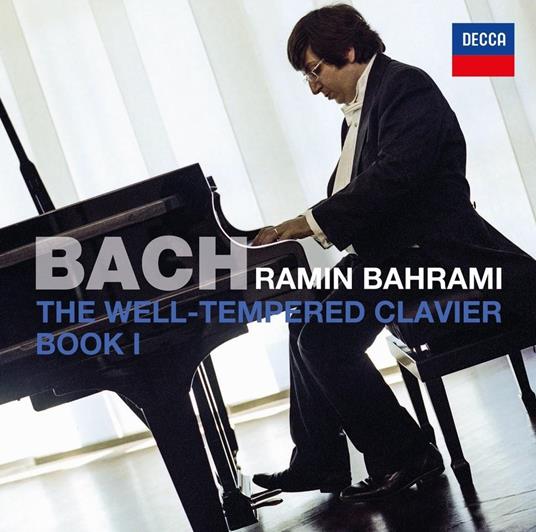
The well tempered harpsichord


The two books of Preludes and Fugues bearing the title of Well-Tempered Clavier date back to two different periods in Bach's life and activity.  Book I was completed in 1722 during Köthen's period, as the autograph preserved in the Deutsche specifies Staatsbibliothek in Berlin, while Book II was compiled between 1740 and 1744 when the great musician was now permanently residing in Leipzig.  This second autograph, considered lost for a long time, was purchased in 1896 by the British Museum in London, where it is located.  There are various copies of the complete collection.  Some of them saw the light already in the years immediately following the creation of the work.

Only the first book appeared with the title of Well-tempered Harpsichord, whereas the second book bore the title of Twenty-four new preludes and fugues.  The layout of the two books is perfectly analogous so that they were usually considered two parts of the same work.  Each book includes twenty-four Preludes and twenty-four Fugues: a Prelude and a Fugue for each of the different shades that follow one another in ascending chromatic order.

Each piece has its own specific character that differentiates it from all the others.  The Preludes are carried out in multiple forms and constitute the moment, so to speak static, of the compositional structure: furthermore, the Preludes show a greater variety of attitudes, they refer to the archaic style of the Toccata, or they anticipate the gallant style, they are affected by specific organ compositions, or they refer to the dances of the ancient Suite.  The Fugues, on the other hand, represent the dynamic element of the compositional structure.  They signify the outcome of Bach's astonishing inventiveness on the same subject, moving from the simplest to the most complex figures.  Bach treats them with new aspects and is very close to the nature of the thematic material used each time.  There is a two-part fugue in the first book, eleven three-part fugues, ten four-part fugues, two five-part fugues; in book II, there are fifteen three-part fugues and nine four-part fugues.  As Alberto Basso observes with insight, Bach was "very expert in the art of fugue, which in his youth he had cultivated above all in cantatas and works for organ, with the fugues of the well-tempered harpsichord he set about to give a systematic and scientific arrangement to a subject in boiling, confirming how provocative the manifestation of the laws of attraction could be exerted by the progressive affirmation of tonalism.  The stylus antiquus, the counterpoint understood in the most rigorous of its expressions that of canonical imitation, now found a new setting: with the consolidation of the temperate staircase, the fugue was erected as a rigid but not immobile architectural system, bound to a specific formalism which could affect every aspect of the composition, not least the nature of the thematism.


The Preludes and Fugues of the 2nd book, perfectly analogous in their layout, substantially present some differences compared to the previous collection, the main one of which lies in the greater breadth of the Preludes of the 2nd book, also highlighted by the frequent use of the form bipartite (nos. 2, 5, 8, 9, 10, 12, 15, 18, 20 and 21), mainly with a more significant second part. This attention paid to the bipartite structure probably derives from the habit of the forms of dance. Also, in the Fugues of the II book, in addition to the adoption of the archaic style (nos. 7 and 9) and the absence of five-voice schemes, the evident influence of dance rhythms occurs (nos. 1, 4, 11, 13, 15, 17, 21 and 24). Finally, the relationship of metric unity between Prelude and Fugue is less marked, which in the first book occurs in nine cases while in the second only in five (nos. 2, 3, 8, 12, 20). From these and other observations derives the consideration that the second book of Preludes and Fugues was created in an artistic and practical context very different from the one existing in Köthen, where the need for an ethical commitment to take care of the gradual professional preparation of Bach's first children. In Leipzig, as Alberto Basso once wrote, "in the bourgeois and academic civitas lipsiense, the well-tempered harpsichord is at the center of a compositional process in which keyboard instruments, harpsichord, and organ emerge as protagonists, with an astonishing progression of inventions and deductions that, coming back from the tested experiences of the suite and the concert, conquer the deep spaces of speculation, of musica artificialis, of the ars combinatorial, without losing sight of the initial opportunities and motivations that are those of the exercise, of the experimentum, of the ratio ordinis."