Tuesday, February 1, 2022

Music, Hermetic Poetry, and Oriental Philosophies - Interview with Claudio Spinosa - by Maria Teresa De Donato

 Music, Hermetic Poetry, and Oriental Philosophies

Interview with Claudio Spinosa

by Maria Teresa De Donato


Dear friends, hello and welcome back!

Here I am to resume the series of interviews through which I have presented – and will continue to do so – friends and colleagues, authors and artists of various kinds, as well as characters who work in different fields and whom I think you may find interesting.

Today Claudio Spinosa, class 74, from Sulmona, is here with us, also a rather eclectic character, very active in the cultural sector.

Claudio engages in many activities, but, as usual, I let him tell us about himself.


MTDD: Hi Claudio, and welcome to my Blog and Virtual Cultural Salon.

It is a pleasure to have you as my guest.

CS: My pleasure, thanks for the invitation.


MTDD: Claudio, why don't you start by introducing yourself to our readers, telling us a little about yourself, your studies, your work, and anything else you wish to share with us all?

CS: My working life and studying can be considered entirely ordinary: I graduated from High School, dropped out of the university, and have been employed ever since.


MTDD: From your biography, it emerges that you practiced music for many years and abandoned it to start your poetic adventure in 2005. 

What was the reason behind this choice?

CS: It was not a reasoned choice but rather a casual one. I had a music band that dissolved for personal and work reasons, and our paths diverged.


MTDD: Your first publication has a rather intriguing title: "My duty to be"...

How and why did you come up with this title?

CS: The title is a clear allusion to the Armenian mystic George Ivanovich Gurdjieff, which I read a lot at that time.

My duty could be translated as the duty of every conscious human being to take responsibility for his existence upon himself.


MTDD: I know that you are very fond of Japanese haiku and oriental philosophies and that you practiced yoga as well for several years.

Where did these passions of yours originate from?

CS: I have always felt an attraction towards the East, which has led me to become interested in and read many books about it. Above all, Zen has always represented a fixed point in my non-research research. The encounter with haiku was almost a spontaneous one. The short poem brought to life by master M. Basho in which immediacy and simplicity of the composition are fundamental. The reference to nature, the so-called Kigo, is a characteristic element of the piece expressed in only three lines for a total of 17 syllables (in Japanese sounds on).


MTDD: One of your publications is titled "Quore", a collection that has been called "hermetic" and that prompts the reader to take a careful introspective, an "alchemical" examination – to use your words.

Why did you want to write this type of poem, and what purpose did you set yourself to achieve with it?

CS: As you rightly said, introspection is precisely the critical element to push the reader to reflection, analysis, and self-investigation.


MTDD: Between secular work and literary productions, you find time to do many other things. For example, you have your own YouTube channel to interview emerging authors, and you also define yourself as a 'poet and performer'. Among other things, I read that you also worked on theater in L'Aquila.

Do you want to tell us a little about these activities of yours?

CS: I'm running a small cultural space called 'Il Settimo Tramonto' (the seventh sunset) where I interview authors who want to present a book, an activity, or talk about themselves. I am also part of the Compagnia dei poeti dell'Aquila (Society of Poets of L’Aquila), made up of many poets whose activities range from public reading to book presentations.


MTDD: Do you have any plans for the future that you wish to anticipate?

CS: Yes, I do. I would love to publish other poetry books.


MTDD: Is there any other information you would like to share with our audience?

CS: Read but above all enter the world of poetry. Doing so allows us to feel our most hidden part.


MTDD: Should our readers wish to contact you, how can they do so?

CS: My YouTube channel is

https://youtube.com/channel/UCWKJKnnx_R6mDCcCR9Zf9UQ

My Facebook page is

https://www.facebook.com/paginautore/


MTDD: Thanks, Claudio, for participating in this interview. I hope to have you again as my guest in the future.

CS: With great pleasure. Thank you.


Musica, Poesia Ermetica e Filosofie Orientali - Intervista a Claudio Spinosa - di Maria Teresa De Donato

 Musica, Poesia Ermetica e Filosofie Orientali

Intervista a Claudio Spinosa

di Maria Teresa De Donato


Amici carissimi salve e ben ritrovati!

Riprendo oggi la serie di interviste tramite cui vi ho presentato – e continuerò a farlo – amici e colleghi autori ed artisti di vario tipo, oltre a personaggi che operano in ambiti diversi e che penso possiate trovare interessanti.

Oggi è qui con noi Claudio Spinosa, classe 74, di Sulmona, anche lui personaggio piuttosto eclettico, molto attivo nel settore culturale.

Tante sono le attività in cui Claudio si cimenta, ma, come al solito, lascio che sia lui stesso a parlarci di sé.


MTDD: Ciao Claudio e benvenuto in questo mio Blog e Salotto Culturale Virtuale.

È un piacere averti mio ospite.

CS: Piacere mio, grazie per l’invito.


MTDD: Claudio, perché non inizi con il presentarti ai nostri lettori, raccontandoci un po’ di te, dei tuoi studi, del tuo lavoro e di qualsiasi altra cosa tu voglia condividere con noi tutti?   

CS: La mia vita sia lavorativa che di studi può essere considerata del tutto ordinaria: Diploma superiore con facoltà universitaria non terminata e lavoro dipendente.                             


MTDD: Dalla tua biografia emerge che ti sei occupato per molti anni di musica e che l’hai abbandonata per iniziare la tua avventura poetica nel 2005.

Perché questa scelta?

CS: Non è stata una scelta ragionata ma piuttosto casuale. Avevo una band musicale che per questioni personali e lavorative si scioglie e le strade si dividono.


MTDD: Questa tua prima pubblicazione ha un titolo piuttosto intrigante: “Il mio dovere esserico”…

Come e perché sei approdato a questo titolo?

CS: Il titolo è una chiara allusione al mistico armeno George Ivanovich Gurdjieff, che in quel periodo leggevo molto.

Il mio dovere esserico si potrebbe tradurre come il dovere di ogni essere umano cosciente di prendere su di sé la responsabilità della propria esistenza.


MTDD: So che ti occupi di haiku giapponesi e filosofie orientali, oltre ad aver praticato per anni yoga.

Da cosa nascono queste tue passioni?

CS: Sono sempre stato attratto dall’oriente e questo mi ha portato ad interessarmi e leggere molti libri al riguardo. Soprattutto lo zen ha sempre rappresentato un punto fermo nella mia ricerca non-ricerca. L’incontro con l’haiku è stato quasi naturale. Breve componimento portato in auge dal maestro M. Basho in cui fondamentale è l’ immediatezza e la semplicità della composizione. Il riferimento alla natura il cosiddetto Kigo è un elemento caratteristico della composizione che si estrinseca in solo tre versi per un totale di 17 sillabe (in giapponese suoni on ).


MTDD: Una delle tue pubblicazioni si intitola “Quore”, una raccolta che è stata definita “ermetica” e che spinge il lettore ad un attento esame introspettivo, “alchemico” – per usare le tue parole.

Perché hai voluto realizzare questa tipologia di poesia e qual è lo scopo che ti sei prefisso di raggiungere con essa?

CS: Come hai giustamente detto l’introspezione è proprio l’elemento cardine ossia spingere il lettore alla riflessione, analisi e indagine di sé.


MTDD: Tra il lavoro secolare e le produzioni letterarie trovi il tempo di fare anche molte altre cose. Hai, ad esempio, un tuo canale YouTube che utilizzi per fare interviste ad autori emergenti e ti definisci anche ‘poeta e performer’. Tra l’altro ho letto che ti sei occupato anche di teatro a L’Aquila.

Vuoi raccontarci un po’ di queste tue attività?

CS: Sto portando avanti un piccolo spazio culturale chiamato ‘Il Settimo Tramonto’ dove intervisto autori, appunto, che vogliono presentare un libro, un’attività o semplicemente parlare di sé. Faccio parte inoltre della Compagnia dei poeti dell’Aquila composta da un nutrito numero di poeti con attività che vanno dal reading pubblico alla presentazioni di libri.


MTDD: Hai qualche progetto per il futuro che vuoi anticiparci?

CS: Sicuramente pubblicare altri libri di poesia.


MTDD: C’è qualche altra informazione che ti farebbe piacere condividere con il nostro pubblico?

CS: Leggete ma soprattutto entrate nel mondo della poesia. Ciò permette di sentire la nostra parte più nascosta.


MTDD: Nel caso i nostri lettori volessero contattarti, in che modo potranno farlo?

CS: Canale YouTube:

https://youtube.com/channel/UCWKJKnnx_R6mDCcCR9Zf9UQ

Pagina FB

https://www.facebook.com/paginautore/


MTDD: Grazie Claudio per aver partecipato a questa intervista. Spero di averti ancora mio ospite in futuro.

CS: Con molto piacere. Grazie.


Musik, hermetische Poesie und orientalische Philosophien - Interview mit Claudio Spinosa - von Maria Teresa De Donato

 Musik, hermetische Poesie und orientalische Philosophien

Interview mit Claudio Spinosa

von Maria Teresa De Donato


Liebe Freunde, hallo und willkommen zurück!

Heute setze ich die Reihe von Interviews fort, in denen ich Freunde und Kollegen, Autoren und Künstler verschiedener Art sowie Persönlichkeiten, die in verschiedenen Bereichen arbeiten und von denen ich denke, dass Sie sie interessieren könnten, vorgestellt habe – und weiterhin tun werde.

Heute ist Claudio Spinosa, Klasse 74, aus Sulmona hier bei uns, ebenfalls ein eher eklektischer Charakter, sehr aktiv im kulturellen Bereich.

Claudio engagiert sich in vielen Aktivitäten, aber wie immer lasse ich ihn von sich erzählen.


MTDD: Hallo Claudio und willkommen zu meinem Blog und meiner virtuellen u.  kulturellen Salon.

Es ist mir eine Freude, Dich als meinen Gast zu haben.

CS: Gerne, danke für die Einladung.


MTDD: Claudio, warum stellst Du Dich unseren Lesern nicht erst einmal vor, erzählst uns ein wenig über Dich, Dein Studium, Deine Arbeit und was Du sonst noch mit uns allen teilen möchtest?

CS: Mein Berufsleben wie auch meine Ausbildung kann man als ganz normal bezeichnen: Abitur mit unvollendetem Studium und abhängiger Arbeit.


MTDD: Aus Deiner Biografie geht hervor, dass Du Dich seit vielen Jahren mit Musik beschäftigen und diese verlassen hast, um 2005 Dein poetisches Abenteuer zu beginnen.

Warum diese Wahl?

CS: Es war keine begründete Entscheidung, sondern eher eine zufällige. Ich hatte eine Musikband, die sich aus privaten und beruflichen Gründen auflöst und die Wege auseinandergehen.


MTDD: Deine erste Veröffentlichung hat einen ziemlich faszinierenden Titel: “Meine Pflicht zu sein” …

Wie und warum bist Du zu diesem Titel gekommen?

CS: Der Titel ist eine klare Anspielung auf den armenischen Mystiker George Ivanovich Gurdjieff, den ich damals viel gelesen habe.

Meine persönliche Pflicht könnte man übersetzen als die Pflicht jedes bewussten Menschen, die Verantwortung für seine eigene Existenz auf sich zu nehmen.


MTDD: Ich weiß, dass Du Dich mit japanischem Haiku und orientalischen Philosophien beschäftigst und seit Jahren Yoga praktizierst.

Woraus sind diese Leidenschaften entstanden?

CS: Der Osten hat mich schon immer angezogen, und das hat mich dazu gebracht, mich dafür zu interessieren und viele Bücher darüber zu lesen. Vor allem Zen war immer ein Fixpunkt in meiner nicht-forschenden Forschung. Die Begegnung mit Haiku war fast selbstverständlich. Kurzes Gedicht, das von Meister M. Basho zum Leben erweckt wurde und in dem Unmittelbarkeit und Einfachheit der Komposition von grundlegender Bedeutung sind. Der Bezug zur Natur, das sogenannte Kigo, ist ein charakteristisches Element der Komposition, die in nur drei Zeilen auf insgesamt 17 Silben (in japanischen Lauten) zum Ausdruck kommt.


MTDD: Eine Deiner Veröffentlichungen trägt den Titel “Quore”, eine Sammlung, die als “hermetisch” bezeichnet wurde und die den Leser zu einer sorgfältigen, introspektiven, “alchemistischen” Untersuchung auffordert – um Deine Worte zu gebrauchen.

Warum wolltest Du diese Art von Gedicht machen und was ist das Ziel, das Du Dich damit gesetzt hast?

CS: Wie Du richtig gesagt hast, ist die Introspektion genau das Schlüsselelement, das den Leser zum Nachdenken, Analysieren und Selbsterforschen anregen soll.


MTDD: Zwischen weltlicher Arbeit und literarischen Produktionen findet man auch Zeit für viele andere Dinge. Du hast zum Beispiel einen eigenen YouTube-Kanal, auf dem Du aufstrebende Autoren interviewst, und Du definierst Dich auch als “Poet und Performer”. Ich habe unter anderem gelesen, dass Du in L’Aquila auch am Theater gearbeitet hast.

Möchtest Du uns etwas über diese Aktivitäten erzählen?

CS: Ich betreibe einen kleinen Kulturraum namens “Il Settimo Tramonto” (der siebte Sonnenuntergang), wo ich Autoren interviewe, die ein Buch oder eine Aktivität vorstellen oder einfach über sich selbst sprechen möchten. Ich bin auch Mitglied bei der Compagnia dei poeti dell’Aquila (Gesellschaft der Dichter von L'Aquila), die sich aus einer großen Anzahl von Dichtern zusammensetzt, deren Aktivitäten von öffentlichen Lesungen bis hin zu Buchpräsentationen reichen.


MTDD: Hast du Pläne für die Zukunft, die Du vorwegnehmen möchtest?

CS: Auf jeden Fall weitere Gedichtbände veröffentlichen.


MTDD: Gibt es noch andere Informationen, die Du mit unserem Publikum teilen möchtest?

CS: Lesen Sie, aber tauchen Sie vor allem in die Welt der Poesie ein. Dies erlaubt uns, unseren verborgensten Teil zu spüren.


MTDD: Falls unsere Leser Dich kontaktieren möchten, wie werden sie das tun?

CS: YouTube-Kanal:

https://youtube.com/channel/UCWKJKnnx_R6mDCcCR9Zf9UQ

FB-Seite

https://www.facebook.com/paginautore/


MTDD: Danke Claudio für die Teilnahme an diesem Interview. Ich hoffe, Dich in Zukunft wieder als Gast zu haben.

CS: Sehr gerne. Danke schön.


Thursday, January 13, 2022

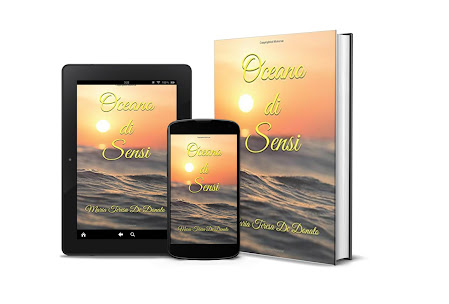
Ocean of Senses – A Novel by Maria Teresa De Donato - Review by Josie Magie

 Ocean of Senses – A Novel by Maria Teresa De Donato

Review by Josie Magie


"Ocean of Senses" is the story of Claudia, a sweet, sensitive, strong, self-confident, and passionate woman who retraces her life through memory. The reader will get to know her through her the story of her daily life,  multiple emotions, and her relationships with others.

Claudia is a woman of values, very close to her family, and loves and respects her lands' culture and traditions.

It is the story of discovering oneself, what one would like to be, of love lived without inhibitions, an intense passion that is entirely physical, emotional, and psychological union. It is the story of a woman who reaches the fullness of herself through this true and overwhelming love, which she slowly learns to discover. At times, the scenes of uninhibited love, erotic scenes are always described with composed vitality and never disturb the reader. The love the protagonist experiences satisfies and should not be repressed but lived healthily. "Ocean of Senses" is not only a book of love but also a historical one. Some detailed descriptions of the environments and historical information enrich the novel and contextualize the characters.

This book can be read all at once, catches the reader's attention, and intrigues him to the end. The language is clear, fluid, immediate, fresh, and involves all the senses.

It is an absolute pleasure to read it. 

Oceano di Sensi – Romanzo di Maria Teresa De Donato - Recensione di Josie Magie

 Oceano di Sensi – Romanzo di Maria Teresa De Donato

Recensione di Josie Magie


"Oceano di Sensi" è la storia di Claudia, una donna dolce, sensibile, forte, sicura si sé e passionale che ripercorre la sua vita attraverso il ricordo. Il lettore imparerà a conoscerla mediante il racconto del suo vissuto quotidiano, ma anche attraverso le sue molteplici emozioni e rapporti con il prossimo.

Claudia è una donna di valori, legatissima alla famiglia e che ama e rispetta la cultura e le tradizioni delle sue terre.

È la storia della scoperta di sé, di ciò che si vorrebbe essere, di un amore vissuto senza inibizioni, un amore intenso che è completa unione fisica, emotiva e psicologica. È la storia di una donna che raggiunge la pienezza di sé attraverso questo tipo di amore, vero e travolgente, che impara pian piano a scoprire. Le scene di un amore disinibito, scene erotiche a tratti, sono sempre descritte con composta vitalità e mai disturbano il lettore. 

L’amore vissuto dalla protagonista è un tipo di amore che appaga e che non va represso, ma vissuto in maniera sana, "Oceano di Sensi" non è solo un libro d’amore, ma anche storico. Ad arricchire il romanzo e contestualizzare i personaggi, infatti, sono le descrizioni dettagliate degli ambienti e le notizie storiografiche.

Un libro molto scorrevole da leggere, che prende il lettore e lo incuriosisce fino alla fine. Il linguaggio è chiaro, fluido, immediato e fresco e coinvolge tutti I sensi.

Un vero piacere leggerlo. 

Ozean der Sinne – Roman von Maria Teresa De Donato - Rezension von Josie Magie

 Ozean der Sinne – Roman von Maria Teresa De Donato

Rezension von Josie Magie


“Ozean der Sinne” ist die Geschichte von Claudia, einer süßen, sensiblen, starken, selbstbewussten und leidenschaftlichen Frau, die ihr Leben in der Erinnerung nachvollzieht. Der Leser lernt sie durch die Geschichte ihres täglichen Lebens kennen, aber auch durch ihre vielfältigen Emotionen und Beziehungen zu anderen.

Claudia ist eine Frau mit Werten, die ihrer Familie sehr nahe steht und die die Kultur und Traditionen ihres Landes liebt und respektiert.

Es ist die Geschichte der Entdeckung von sich selbst, von dem, was man sein möchte, von einer Liebe, die ohne Hemmungen gelebt wird, einer intensiven Liebe, die eine vollständige körperliche, emotionale und psychische Einheit ist. Es ist die Geschichte einer Frau, die durch diese Art von wahrer und überwältigender Liebe, die sie langsam zu entdecken lernt, zur Fülle ihrer selbst gelangt. Die Szenen ungehemmter Liebe, manchmal erotische Szenen, werden immer mit gelassener Lebendigkeit beschrieben und stören den Leser nie. Die von der Protagonistin erlebte Liebe ist eine Art Liebe, die befriedigt und die nicht unterdrückt, sondern gesund gelebt werden sollte, “Ozean der Sinne” ist nicht nur ein Liebesbuch, sondern auch ein historisches. Um den Roman zu bereichern und die Charaktere in einen Kontext zu stellen, sind die detaillierten Beschreibungen der Umgebungen und die historiographischen Informationen.

Ein sehr flüssig zu lesendes Buch, das den Leser bis zum Schluss fesselt. Die Sprache ist klar, flüssig, unmittelbar und frisch und spricht alle Sinne an.

Ein wahres Vergnügen, es zu lesen.

Tuesday, January 11, 2022

The Scent of the Days - by Elisabetta Fioritti - Review by Maria Teresa De Donato

 The Scent of the Days - by Elisabetta Fioritti

Review by Maria Teresa De Donato


The Scent of the Days: a more suitable title could not have been found for this book. Whether you consider it a fictional memoir or a fictional novel is of little importance. In its deepest essence, this is, and remains, a Hymn to Love and Life.


The Scent of the Days brings us back to a time, a world made of simple things where people worked hard, contenting themselves with the little they had. It was a world where children played carefree barefoot, of village festivals with accordion music and good wine; an era in which people used to appreciate even the little available and were happy.


Love for the family, loved ones, relatives who lived at home, and those who came periodically to visit, and that for friends, even and ancient ones, is the primary element of this work. Sweet and nostalgic memories of people who have accompanied our journey for a single moment, for a short time, or a whole life flow through the mind, enriching the days and the meaning of our experience.


The profound spiritual Life - that in the case of 'Barbara', the protagonist coincides with the Christian-Catholic religion - emerges and plays a fundamental role. Indeed, it protects and consoles during the moments of trial that, inexorably and inevitably, Life presents. God the Creator is perceived so far away and at the same time paradoxically close, ready to welcome us into his arms. He encourages us and strengthens our faith, listens to our prayers, requests, the cry of pain, and our tears. He is always present and punctually, in his way, responds.


This novel has highly introspective traits that lead to reflection on relationships of all kinds, starting right from the sentimental ones. On the one hand, there is the idealization of the other. On the other, the reality manifests itself over time, bringing the reciprocal differences to light, and above all, in character. The latter is a clear example of this. Diversity is fascinating, but you have to be ready and willing or at least learn to accept it, manage it and negotiate. When Love has solid foundations and includes esteem, respect, empathy, understanding, and awareness, it acts as a glue and allows you to overcome trials and difficult moments. The desire to be together and continue the journey by holding hands triumphs inexorably, strengthening the relationship and making it grow and mature.


A great sense of empathy, of availability towards others, whoever they are, especially young people, evident throughout this novel, emerges in this literary work... Our generation of baby boomers has not been able "to rebuild a solid world" to understand that "the soul of children it is as romantic as ours was, only in a different way." "Their way of dressing is a form of contestation, the search for their personality, [and] betrays their search for affirmation and truth, which they cannot find in a world of fiction ... " (Fioritti, 2016, p. 282). This problem, or perhaps simply this generational factor, can be better understood and accepted when viewed from a perspective based on unconditional Love and empathy rather than judgment and, even worse, an attitude of rejection and condemnation.


The self-analysis and careful observation of human behaviors and dynamics make us aware of the importance and, at the same time, the fragility of being a parent. In fact, “this is the most difficult task of parents: watching helplessly” (Fioritti, 2016, p. 185), letting their children make their choices, have their disappointments, and emerge from the ashes. Only in this way will they acquire experience, maturity, awareness, and strengthen their character. No one taught us to be children, and no one has trained us to be a parent. Hence, each of us will learn the role that he will have to play, just as he will also learn, through various relocations, to adapt to new places, new Life, and behavioral models hitherto unknown. That will allow him to integrate into the social fabric, although he might have left part of his heart where he was born and has its roots.

So, therefore, between mothers' and grandmothers' succulent recipes, the warmth of the family gathered, especially during the holidays, the table set, the game of tombola with beans, a glass of red face 'that makes good blood', our existence goes on. The memories of laughter and chats between family members, relatives, and friends allow you to continue this incredible, fascinating, and stimulating journey full of surprises and, at times, even challenges.


Life is a mystery, but it is just as intriguing, compelling, and the invitation of the protagonist Barbara is undoubtedly to live it to the fullest, enjoying even the simplest things, but which are ultimately the only ones that give it a real and profound meaning.


People should read this book on the growth and acquisition of awareness through the various phases of human existence in one breath. Many will recognize themselves in its pages. On the other hand, many others will be fascinated by the simplicity of its direct and immediate language, which opposes the depth of the issues addressed.


This is a literary work written with the heart and reading I recommend to people of all ages.